
So you need a business tax attorney.
Maybe a letter from the IRS just landed on your desk.
Maybe you're trying to get ahead of one before it does.
Either way, you're worried, and you should trust that feeling.
Federal tax lien filings jumped 36% between 2022 and 2025.
Over 214,000 notices went out in the most recent year alone (CNBC, 2026).
That's not a scare tactic. That's just what's happening right now, today, to business owners like you.
I've watched people freeze the second that letter shows up.
They call their CPA. That's the right first move. It's just not always the last one you'll need.
This guide is for the moment your CPA says "you might want a lawyer for this."
I'll walk you through what a business tax attorney actually does, when a CPA alone isn't enough, and how to pick the right one here in Las Vegas.
Key Takeaways
- Federal tax lien filings rose 36% from 2022 to 2025, topping 214,000 notices (CNBC, 2026).
- Only a licensed attorney can take your case to U.S. Tax Court. Your CPA's authority stops at the IRS's front door (Klasing Associates).
- An estimated 92% of taxpayers who qualified for penalty relief never got it (TIGTA Report 2012-40-113).
- 99.3% of Nevada's roughly 356,000 businesses are small businesses (SBA Office of Advocacy, 2025 Nevada Small Business Profile).
What Does a Business Tax Attorney Actually Do?
Here's the honest answer.
A business tax attorney fights the IRS on your behalf.
They negotiate settlements. They can walk into U.S. Tax Court and argue your case. Your CPA cannot do either of those things.
There's another piece most business owners never think about until it's too late.
Attorney client privilege protects what you tell your attorney, even in a criminal referral. The accountant client privilege your CPA offers does not stretch that far (Freeman Law).

Think about your own setup for a second.
Most business owners hire a CPA for the everyday stuff. Bookkeeping. Filings. Routine planning. That works fine, until it doesn't.
The moment the IRS opens an audit, or even hints at fraud, everything changes.
Your accountant client privilege stops protecting your conversations right there.
Your attorney client privilege keeps working, but only if you brought the attorney in before you said anything you'd regret.
Here's the quotable version, in plain terms.
The privilege created by IRC §7525(a)(1) does not cover criminal tax proceedings or Tax Court litigation. Only a Kovel arrangement, where an attorney hires the CPA to help with legal advice, extends real attorney client privilege to the accountant's work (Freeman Law; United States v. Kovel, 296 F.2d 918 (2d Cir. 1961)).
If you want to compare firms that offer both credentials under one roof, I broke that down in our guide to the top CPA firms in Las Vegas.
Why Is the IRS Auditing More Small Businesses Right Now?
Short answer. It's not random anymore.
The IRS is aiming to raise the large partnership audit rate from 0.1% in 2019 to 1% by tax year 2026. That's a tenfold jump (IRS Strategic Operating Plan Update, May 2024).
Large corporation audit rates are set to climb from 8.8% to 22.6% over that same window.
Here's the part nobody talks about.
The IRS is doing this with fewer people, not more.
The agency lost 28,312 employees between January 2025 and March 2026 (Peter G. Peterson Foundation).
Fewer staff plus higher targets means one thing. They're not doing random checks anymore. They're going after bigger, more complicated cases.
So what does that mean for you, a small business owner in Las Vegas, not a $250 million corporation?
It means the audits that do happen are getting harder. Entity structuring. Partnership allocations. S-corp reasonable compensation questions.
Exactly the areas where a CPA alone might not have the authority to negotiate for you.
If you're weighing up your entity structure right now, I covered a related decision in our guide to the QSBS exclusion for founders.
Which Businesses Get Audited the Most, and What Happens Next?
Let's look at the real numbers.
The IRS closed 505,514 audits in 2024. That recommended $29 billion in extra tax owed (IRS FY2024 Data Book).
But your risk depends entirely on how your business is structured.
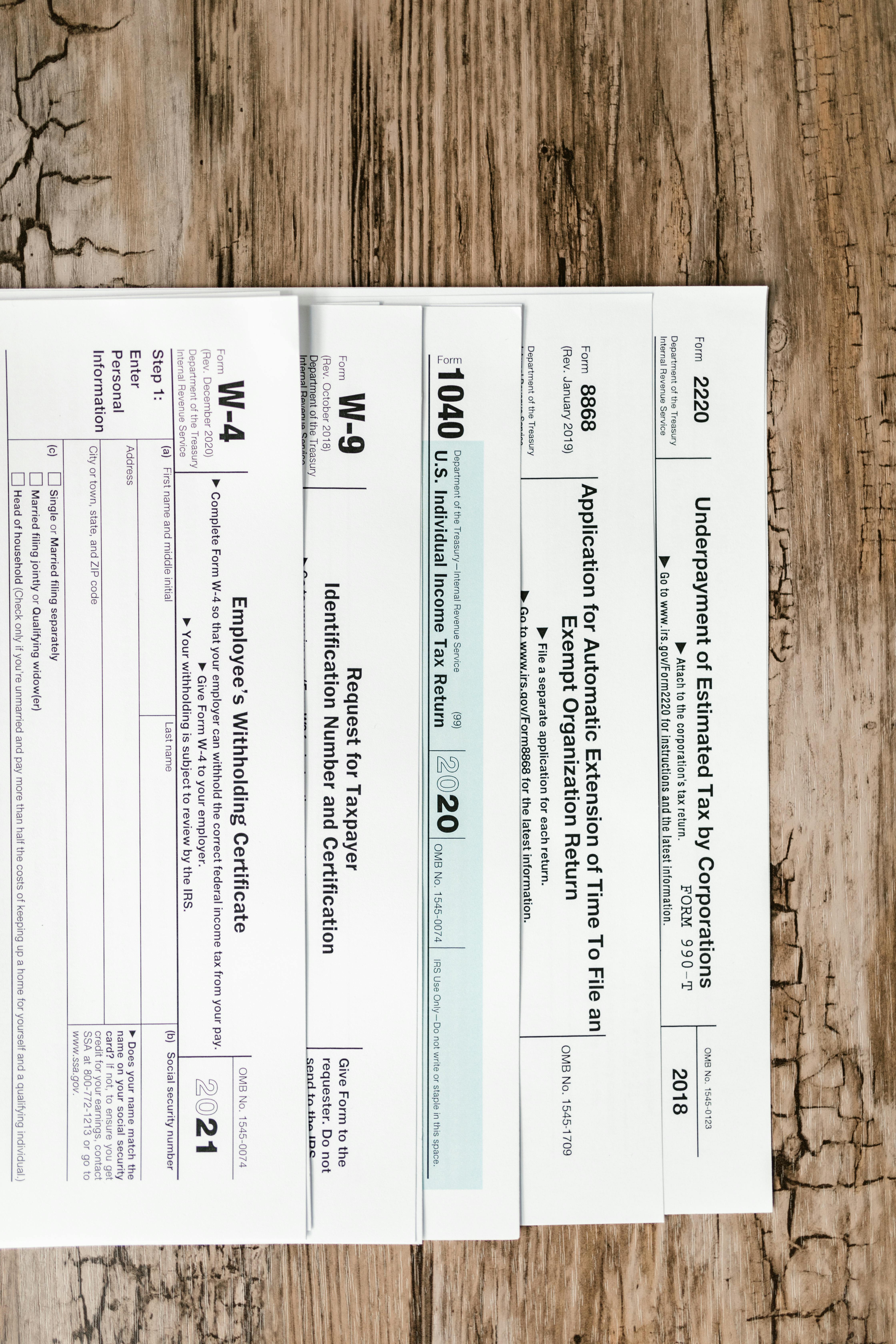
Here's the breakdown, straight from the IRS Data Book.
- Overall audit rate across all returns: around 0.5%
- C-corporations: around 0.2%
- S-corporations: around 0.03%
- Partnerships: around 0.02%
(IRS Data Book 2024, Pub. 55-B)
Now, does a low audit rate mean you're safe to ignore your paperwork?
Not even close.
A Government Accountability Office review found the IRS audited just 54 large partnerships in 2019. Over 80% of those audits ended in no change to the tax owed (GAO-23-106020).
That tells you something important. Good preparation wins, even under heavier scrutiny.
But when an audit does go badly, it escalates fast. Straight into liens. Remember that 36% jump we opened with (CNBC, 2026).
Once your dispute gets resolved, most owners fold it into a bigger plan. I wrote about that in our guide to wealth management planning for Las Vegas business owners.
Business Tax Attorney vs CPA. What's the Real Difference?
Your CPA can prepare your return.
They can handle routine IRS letters.
But only a licensed attorney can take your case to U.S. Tax Court, or invoke real attorney client privilege if things turn criminal.
That difference decides outcomes the moment an audit turns hostile.

I'm going to be direct with you here, because this isn't theoretical for us.
At our firm, the same person holds both licenses.
We've had cases where the client's CPA caught the accounting issue early. Good work. Then the IRS raised the possibility of a fraud referral.
At that point, only the attorney side of the practice could step in and protect what our client said next.
CPAs are barred from Tax Court, full stop, unless they've passed the court's separate nonattorney exam. Most never do (Klasing Associates).
If your business is contesting a six figure or seven figure adjustment, that gap can decide your case before you even get to argue it.
Ask yourself this. Wouldn't you rather have both credentials working your file, instead of coordinating two separate professionals in the middle of a crisis?
If you're thinking about entity level strategy alongside your dispute, start with our guide to advanced tax strategies for high income earners.
Why Do So Many Business Owners Miss Penalty Relief They Already Qualify For?
This one genuinely frustrates me.
An IRS commissioned study found that roughly 1.65 million taxpayers qualified for First Time Penalty Abatement.
Only about 8% actually got it. That left more than $181 million in penalties sitting on the table, unclaimed, by people who were entitled to have them removed (TIGTA Report 2012-40-113).
Here's why this keeps happening.
The IRS does not apply this relief automatically in most cases.
Someone has to ask for it. Someone has to cite the right code section. Someone has to follow up if the first request gets denied.
That's a process step, not some clever tax strategy. Which is exactly why it slips through the cracks.
This particular study is over a decade old, and the IRS hasn't repeated it since. But practitioners see the same pattern today. The penalty gets assessed automatically. Relief only happens when someone asks for it in writing, citing the right standard.
Firms that combine CPA and attorney oversight tend to catch this during routine filing review. See how dual licensed Las Vegas firms compare on exactly this point.
What Does a Business Tax Attorney Cost, and How Do You Pick One in Las Vegas?
Let's talk money, because everyone wants to know and nobody wants to ask.
Business tax attorneys typically charge $200 to $1,000 an hour.
Or a flat fee. Anywhere from around $1,500 for a straightforward notice response, up to $75,000 or more for a full Tax Court case.
Those are industry reported ranges, not a fixed government rate. Your actual cost depends on how complex your entity is and how far your dispute has already gone.

Nevada is a small business state through and through. 99.3% of its roughly 356,000 businesses are classified as small businesses (SBA Office of Advocacy, 2025 Nevada Small Business Profile).
Most Las Vegas business owners want the same thing when they're facing an IRS problem. Someone who understands both the legal exposure and the accounting behind it. Not just one half of the picture.
Before you hire anyone, ask these questions:
- Are they actually admitted to practice in U.S. Tax Court? Not just licensed as an attorney generally.
- Do they hold both CPA and JD credentials, or work hand in hand with a CPA on your file?
- Is the fee structure in writing before any work starts? Hourly, flat fee, or hybrid.
- How many IRS audits or Tax Court cases have they actually handled in the last two years?
If you've got an IRS notice sitting on your desk and you're not sure whether you need a CPA, an attorney, or both, that's exactly what we do at CPA Attorney LLC in Las Vegas. Schedule a consultation and get a straight answer on where your case stands.
Frequently Asked Questions
Can a CPA represent me in U.S. Tax Court?
No. Only licensed attorneys, or non attorneys who pass the Tax Court's separate nonattorney exam, can litigate a case there. A CPA can represent you in administrative IRS proceedings, but once your case moves to litigation, you need an attorney on the file (Klasing Associates).
What's the difference between a tax attorney and an enrolled agent?
An enrolled agent is licensed by the IRS to represent you in audits and collections, but they can't litigate in Tax Court or invoke attorney client privilege. A tax attorney can do both. That gap matters more now that federal tax liens have jumped 36% since 2022 (CNBC, 2026). See our QSBS exclusion guide for how entity choice plays into this too.
Will hiring a tax attorney make the IRS think I'm guilty?
No. Hiring representation is completely standard practice, not a confession. The IRS closed over 505,514 audits in 2024 alone, and represented taxpayers are a routine part of that caseload. Having counsel usually speeds things up, because everything routes through one point of contact (IRS FY2024 Data Book).
How long does a business IRS audit actually take?
It depends on your entity's complexity. A straightforward correspondence audit can wrap up in a few months. A field audit of a partnership or larger corporation can run a year or more, especially now that the IRS is prioritising complex, multi year examinations (IRS Strategic Operating Plan Update, May 2024).
The Bottom Line
An IRS notice doesn't automatically mean disaster.
But it does mean the stakes just changed.
Audit rates are climbing for complex entities. Tax liens are climbing too. And most business owners who miss out on penalty relief do so for one simple reason. Nobody asked for it on their behalf.
Here's what to remember:
- Lien filings are up 36% since 2022. Enforcement is speeding up, not slowing down.
- Only an attorney can take your case to Tax Court, or protect privileged conversations if things turn criminal.
- Most eligible taxpayers never claim the penalty relief they're owed.
Your CPA can usually handle the routine stuff. But a business tax attorney becomes essential the second litigation, criminal exposure, or a serious dispute enters the picture.
If you're weighing your options, our guide to wealth management planning for Las Vegas business owners covers what usually comes next, once your business tax attorney has your case handled.


